The productivity paradox: 96 % of leaders expect gains, 77 % of workers get more work
Upwork Research Institute surveyed 2,500 people and found why AI often does not reduce workload but merely changes its shape.
 Jan Petr1 min read5 views
What the study examined
The global Upwork Research Institute study worked with a representative sample of 2,500 respondents — executives, managers and individual contributors across industries — examining AI adoption and its impact on workload and wellbeing.
Key findings
The productivity paradox
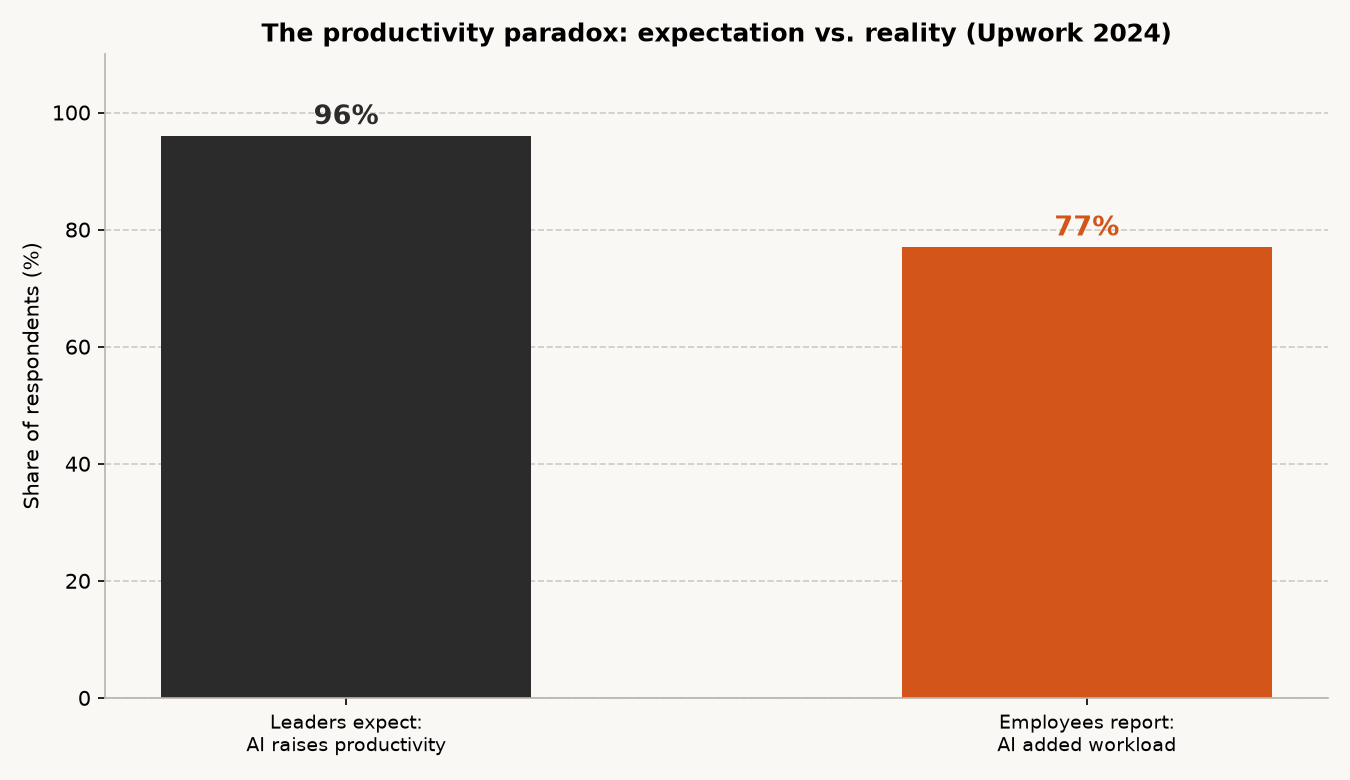
While 96 % of leaders expect AI adoption to raise team productivity, 77 % of employees report that these tools have actually added to their work.
New forms of load
Employees spend significant time learning new tools (39 %) and reviewing errors in generated output (47 %), on top of pressure for speed and volume.
Rising burnout
47 % of employees using AI admit they do not know how to meet the unrealistic productivity expectations set after adoption.
What to do about it
Technology alone will not simplify life unless you change how work and expectations are organised. Producing three times more average emails only floods you and your colleagues.
- Agree success metrics with leadership that measure more than output volume.
- Deliberately spend saved time on strategic thinking and rest.
- Review monthly where the saved time actually went.
Source
Upwork Research Institute (2024). From Burnout to Balance: AI-Enhanced Work Models for the Future. upwork.com/research/ai-enhanced-work-models
Comments
Loading comments…